
Warminster Township Previous Residents Sources
Previous residents research follows several clocks. Bucks recorded-land indexes give a dated ownership trail from 1684 to the present. The assessment and tax systems supply current, rolling property context. The Register archive reaches back to 1684 for estate, marriage, and related genealogical work. State Archives vital indexes and released census schedules can help date a person or household, but neither is an address roster. Warminster municipal permit files and local historical sources add events and context rather than a complete resident list.
| Source | Era covered | Where held | What it can establish |
|---|---|---|---|
| Bucks recorded-land indexes | 1684-present | Recorder research area or LANDEX | Recorded parties, documents, and legal-description trail. |
| Assessment and tax access | Current rolling data | Bucks assessment and tax systems | Parcel, current assessment owner, situs, and tax context. |
| Register archive | Records date to 1684 | Archive Research Center | Estate, marriage, and historic genealogical leads. |
| PA public vital indexes | Birth 1906-1913; death 1906-1968 | State Archives | Name and date leads, not address proof. |
| Federal census | Through 1950 publicly released | NARA and approved archival access | A dated household snapshot with address-format limits. |
| Warminster permits and local history | Dates vary; no online start date verified | L&I request route and local collections | Property events, maps, tax ledgers, and context. |
Start with the most recent document if the question is about a particular property. Start with an estate, death, or family clue only when it can be tied back to the parcel, legal description, or a dated record. That method preserves the difference between ownership and occupancy.
Begin Warminster Township Previous Research
A current parcel is the safest first anchor for past residents work. Use the Bucks tax or assessment route to record the situs, parcel identifier, present assessment owner, and any displayed legal-description or book/page reference. The situs is the property location. A tax mailing address is correspondence data and can belong to a different location or representative. Keeping those labels separate prevents an address-history note from turning into an unsupported claim about a former household.
The assessment system is refreshed weekly and the county warns that a deed can precede the displayed owner update. For a recent sale, locate the recorded instrument through the Recorder before treating the assessment field as the current chronology. A parcel number is especially helpful when an older plan, lot, or subdivision description has outlasted a modern street format.
Note: Keep a research log with the address form, parcel number, deed date, source, and any unresolved name variation.
Follow Warminster Township Previous Deeds
The Recorder is the backbone of a previous residents ownership trail. The Bucks County property-records page says recorded land records run from 1684 to the present. Use the assessment owner and an approximate acquisition period to find the purchase document. Bucks calls a buyer or grantee an Indirect Party and a seller or grantor a Direct Party. Once the recent purchase is found, the former owner becomes the historic grantee to search for an earlier acquisition.
- Get the present parcel, situs, and available legal-description information from Bucks assessment or tax access.
- Search the current owner as an Indirect Party near the known or estimated purchase period.
- Capture the recording date, parties, document reference, and lot, plan, or legal-description clue shown in the record.
- Search the seller as an earlier Indirect Party to locate that person's prior acquisition.
- Repeat the documented sequence, checking plans, estate transitions, or description changes before treating it as one continuous parcel.
- Grantor and grantee
- The grantor transfers an interest. The grantee receives it. Bucks indexes these roles as Direct and Indirect Parties.
- Chain of title
- A sequence of recorded transfers connected through the same property description, not merely a chain of matching names.
- Legal description
- The recorded land language, such as a lot or plan reference, used to distinguish a property when a street label changes.
- Enumeration district
- The geographic area assigned to a census taker. It can help locate the right census schedule but may not mirror a modern address.
Check Warminster Township Previous Indexes
Bucks has historic Recorder index blocks for 1684-1919, 1920-1941, 1942-1951, 1952-1963, 1964-1971, 1972-1979, 1980-1988, 1989-1993, 1994-1998, and 1999-present. The older books are not all pure alphabetical indexes. That is a practical quirk for a previous residents search: bring the full party name, spelling variants, and an approximate transaction year. A staff tutorial in the public research area can be more useful than repeating a broad search.
Do not fill a missing year with a name found in a different parcel or a similar street. Subdivisions, estate transfers, and legal-description changes can interrupt an otherwise plausible chain. The Recorder's party index is a finding aid. The underlying instrument and property description are the evidence that ties a document to the address trail.
Compare Warminster Township Previous Routes
Bucks offers two documented ways to pursue older recorded land. LANDEX is the fee-based online research route. The Recorder also keeps a public research area, which matters when a historic index needs help or online access does not answer an older question. The official Recorder page links both paths and states the county's 1684-present scope. Copies are a separate step, with county-stated page and certification charges that should be checked before ordering.
The Recorder research page is shown below because it is the official starting point for the historical index blocks and the public-research option.
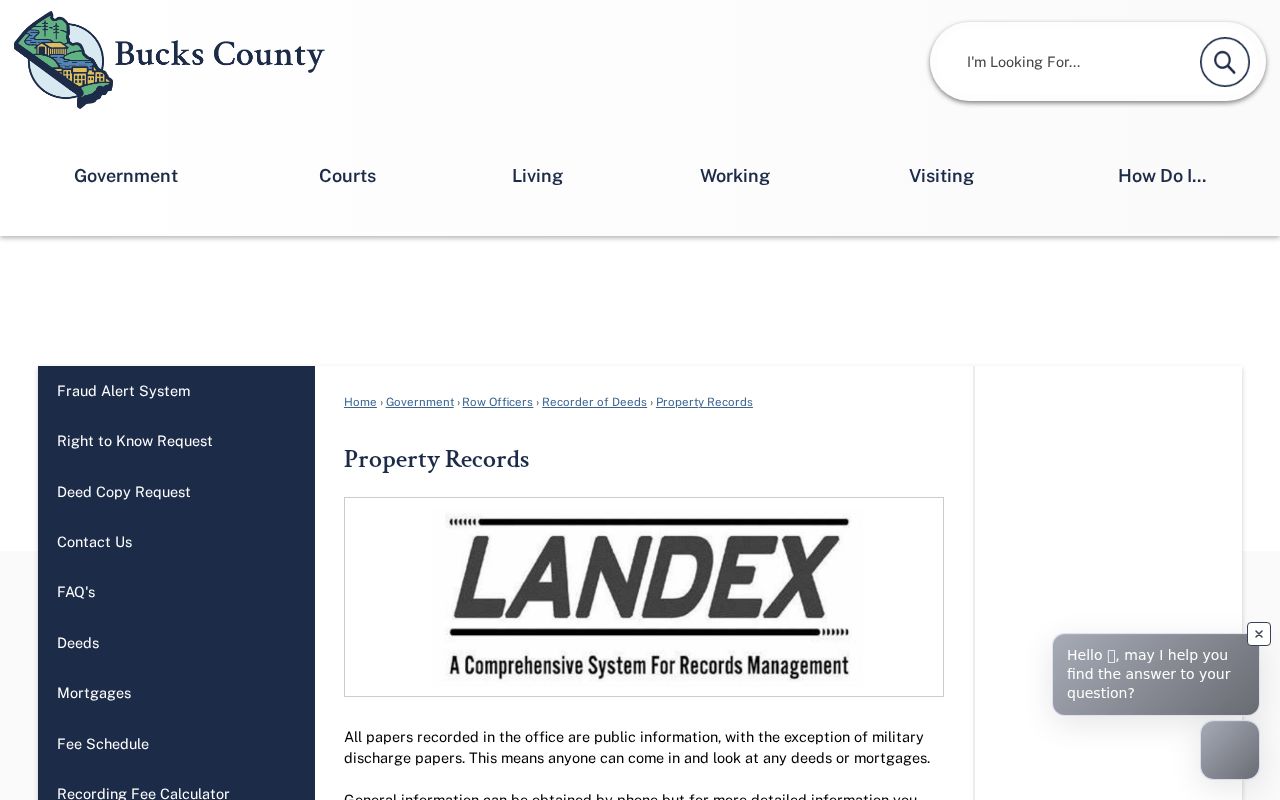
Use the Recorder route to decide whether an online query, a counter visit, or a focused copy request best fits the period and document reference.
The LANDEX recorded-land entry is the online access path identified by Bucks for fee-based recorded-land research.

The LANDEX screen is an access route, not evidence by itself. Record the parcel and document details from a confirmed result before adding it to a prior-owner chronology.
Pair Warminster Township Previous Households
Deeds can omit people who were not parties to a transfer. To address who lived here before, pair ownership records with household sources for the same era. The newest released federal census is 1950 under the 72-year rule. Census entries are snapshots and can use a township or enumeration-district description instead of a current street address. A verified address-ordered directory may add one printed listed occupant for its edition, but no Warminster reverse-directory run was confirmed in this research.
- Choose a dated deed or assessment reference for the address.
- Find the closest released census year and identify the relevant township or enumeration district.
- Ask the Warminster Township Free Library or a historical repository for a confirmed directory volume near that date.
- Photograph or cite the volume's title page and abbreviation key before relying on an entry.
- Compare the household clue with probate, obituary, cemetery, or deed evidence, then record only what each source supports.
For directory holdings and how to verify a volume before using it, the Warminster Township city directory collections give the local archive and library routes without inventing a shelf or year run.
Use Warminster Township Previous Maps
Warminster's strongest local bridge before digital parcel systems is the mix of maps, deeds, tax ledgers, photographs, and local history. The Craven Hall Historical Society finding aid describes material about Warminster and nearby places, including deeds, tax ledgers, maps, documents, photographs, and local-family material. It is a collection description, not an online index. Ask the holding repository about an item, box or folder, access restrictions, and reproduction terms before drawing a property conclusion.
The Township's digital history can supply place names, cemetery references, and historic context. It should lead back to a primary record. For rural or early development periods, an old farm name, village label, or legal description may be the clue that connects a ledger or map to a present parcel. No official source verified a Warminster Sanborn map run or a dated street-renumbering project, so those details should be researched directly rather than assumed.
Use Warminster Township Previous Estates
An estate file can clarify why a property changed hands. The Bucks Register of Wills and Clerk of the Orphans' Court says its records date to 1684, and its Archive Research Center has complete microfilm. Originals from 1684-1936 can be reviewed onsite, with other originals subject to advance request arrangements. The Register's paid name-index search covers 1684-1950; its result detail changes at 1987, when a death date is added to the index printout. These are useful leads for an estate or heir question, not automatic proof that an heir lived at a parcel.
For a death date or family clue, use the Bucks genealogical and archival request route to confirm the current index and copy process. Estate records, marriage applications, and a recorded deed can explain a transition that the land index alone leaves unclear. Sensitive court material can be restricted, so the custodian's access rules control.
Note: An estate connection should be recorded as a dated legal or family link until an address-bearing source supports more.
Respect Warminster Township Previous Limits
Past residents research should preserve gaps. A recorded owner is not every person at the address. A tax mailing field is not a residence statement. A permit identifies an event, not a complete household. Census schedules stop at their public-release date, and a local directory must be verified by its own title page and key. Pennsylvania's Address Confidentiality Program also protects eligible people through substitute-address safeguards in covered records.
Where the trail ends, say so. A short, sourced chronology is more useful than an invented list of previous residents.